
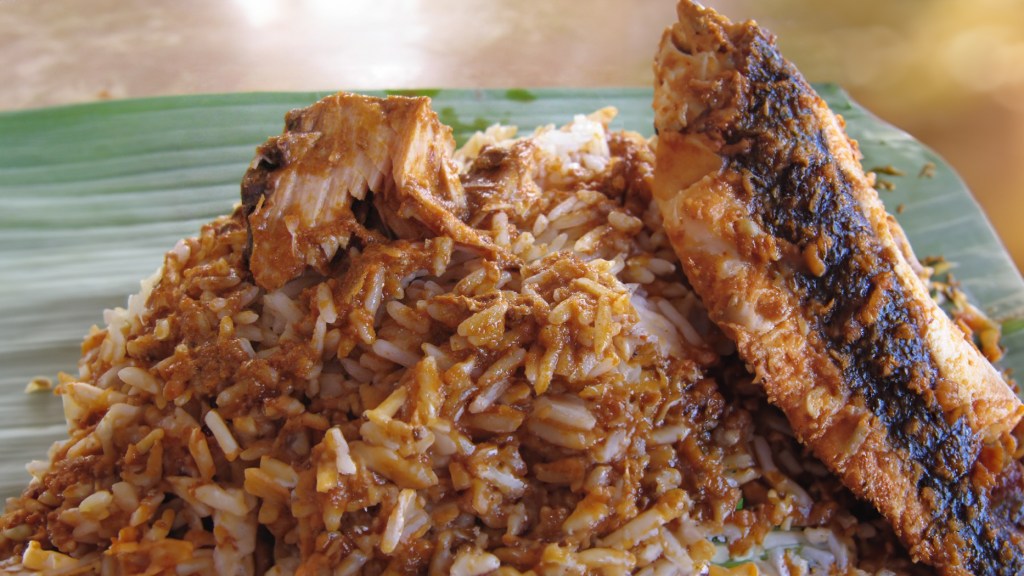
Nasi Dagang is a traditional Malaysian dish originating from the East Coast states of Terengganu and Kelantan. It is a flavorful and aromatic rice dish that is popular as a breakfast or lunch option, especially among the coastal communities.
The dish’s name, “Nasi Dagang,” is derived from the Malay words “nasi,” which means rice, and “dagang,” referring to trading or commercial activities. Historically, Nasi Dagang was a staple food for traders and fishermen who needed a hearty and sustaining meal before embarking on their journeys.
The main component of Nasi Dagang is the glutinous rice, also known as “pulut,” which is cooked with coconut milk and a pinch of salt. The coconut milk gives the rice its characteristic aroma and a slightly sticky texture, making it an ideal complement to the savory accompaniments.
The highlight of Nasi Dagang is the flavorful fish curry that accompanies the rice. Fresh fish, typically tuna or mackerel, is simmered in a fragrant blend of spices, coconut milk, lemongrass, and other aromatic herbs. The resulting curry is rich, creamy, and mildly spiced, adding a delightful burst of flavor to the dish.
Nasi Dagang is usually served with a variety of accompaniments, enhancing its taste and providing a balanced meal. Common sides include hard-boiled eggs, pickled vegetables known as “acar,” and occasionally, fried shaved coconut for added texture.
Today, Nasi Dagang is enjoyed throughout Malaysia and beyond, appreciated for its unique taste and cultural significance. It is a dish that reflects the diverse culinary traditions of the East Coast and serves as a reminder of the region’s historical ties to trading and fishing.
Visitors to Malaysia often seek out Nasi Dagang to experience its delightful flavors and immerse themselves in the country’s rich culinary heritage. Whether enjoyed at local stalls, markets, or specialty restaurants, Nasi Dagang offers a warm and comforting culinary adventure that truly captures the essence of Malaysia’s East Coast cuisine.


 rich Oriental